Cocopeat 5 kg Blocks: Low EC (Washed) vs Buffered — Which Do You Need?
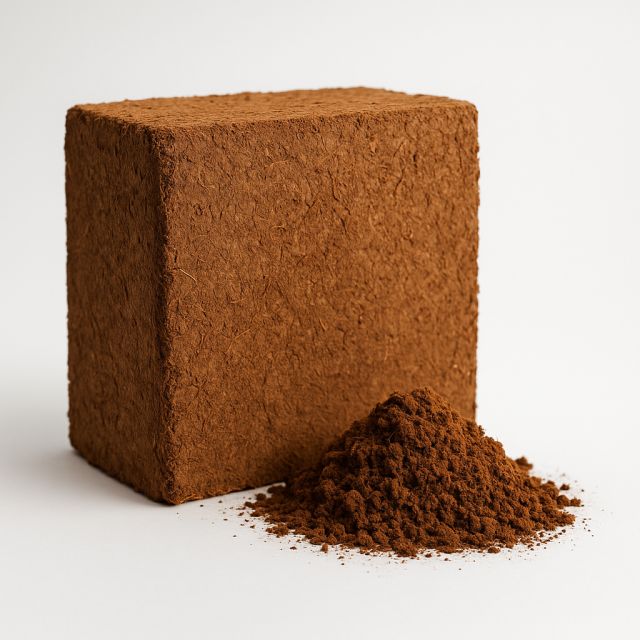
Cocopeat (coco pith) is the fine, spongy material left when coconut husks are processed. Pressed into a 5 kg block, it expands into a large volume of clean, peat-free growing medium. But not all blocks are the same: the two grades you will see most are low EC (washed) and buffered.
What is EC, and why does it matter?
EC (electrical conductivity) measures how much salt is in the coir. Coconut husks often come from trees near the coast, so raw pith can carry salts like sodium and potassium. High EC can burn young roots and upset your fertiliser plan. Washing the pith with fresh water lowers the EC.
Low EC (washed) cocopeat
- Washed with fresh water to bring salts down
- Good for potting mixes, nurseries, seed starting, landscaping and soil improvement
- The usual choice for general horticulture
Buffered cocopeat
Coir naturally holds on to potassium and sodium, and can "steal" calcium and magnesium from your nutrient solution. Buffering treats the washed pith with a calcium solution so these sites are already filled before you plant.
- Recommended for hydroponics and drip-fed systems
- Better for sensitive crops: tomatoes, cucumbers, peppers, strawberries and seedlings
- Gives a more predictable nutrient balance from day one
Quick comparison
| Low EC (washed) | Buffered | |
|---|---|---|
| Salt level | Low | Low |
| Calcium treatment | No | Yes |
| Best for | Potting, nurseries, landscaping | Hydroponics, greenhouse fruiting crops |
| Price | Lower | Slightly higher |
How to check a cocopeat block before you buy
- Ask for the batch EC report — we test every batch and send the result with your shipment.
- Do a quick water test — soak a sample, squeeze out the water and measure it with a handheld EC meter.
- Check moisture and smell — a good block is dry, firm and smells earthy, not sour.
- Look for contamination — no sand, stones or plastic in the expanded peat.
Our 5 kg cocopeat blocks come in both grades, from 1 pallet, and can be shipped LCL to the Maldives and the GCC.
Need a small-lot quote?
Tell us the products, number of pallets and your destination port. We reply within 24 hours.
Request a QuoteWhatsApp us